
FRED HUTCH GRANT INITIATIVE
Building Immunity:
HPV Prevention and Awareness for K-12 students
About the Project
Cancer Pathways is proud to announce that we have been selected as a grant recipient through Fred Hutchinson Cancer Center Office of Community Outreach and Engagement (OCOE) Community Grants Program. Through this initiative, we aim to strengthen HPV prevention education by developing grade-banded, culturally responsive, and medically validated HPV eLearning curricula for K–12 students.
This project will run from April 2026 through April 2027. We are currently seeking community and school partners to collaborate with us throughout the project. If you are interested in partnering, please contact our Project Coordinator, Jana Mastrogiovanni, at [email protected].
Check back here for ongoing updates, resources, and engagement opportunities throughout the project.
Community HPV Events
October 3 | ABC School Day at Bethel High School
Come find us at ABC School Day! Stop by our table to learn more about cancer prevention, HPV, and available resources.
No registration required.
March 11 | South Puget Sound Community College
Join us for a community education event in partnership with SPIPA. Learn more about cancer prevention, HPV, and resources available to you and your family.
Registration required: Email [email protected] to register.
New HPV Curriculum
Check Out Our New HPV Curriculum!
Cancer Pathways has developed two sequential HPV education units for students in grades 6–8 and 9–12, with engaging, age-appropriate lessons designed to build knowledge from middle school through high school.
Explore the full curriculum on our online learning platform, and stay tuned for our new HPV video coming soon!
In the meantime, try our interactive HPV Simulator activity below to learn more about HPV and how it can affect your community!
Cancer Health Equity NOW Podcast Feature
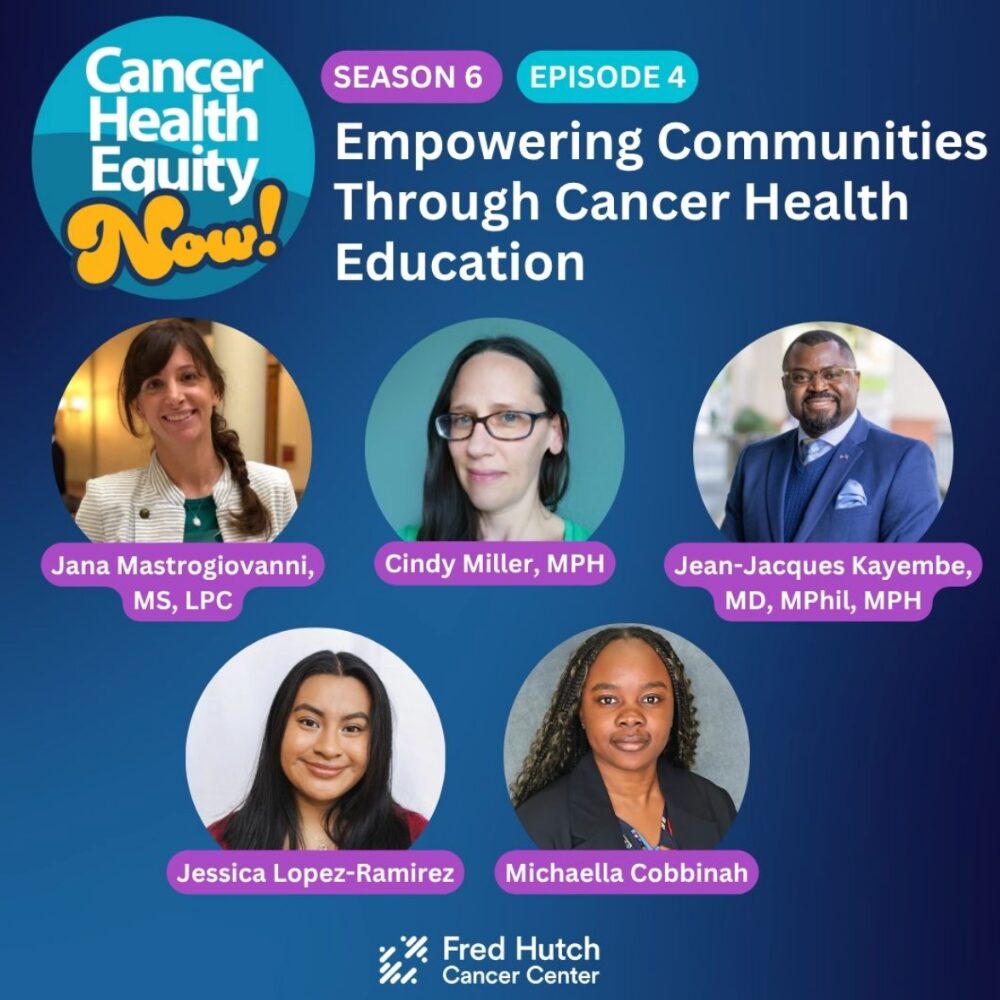
Jana Mastrogiovanni, Director of Programs, and Cindy Miller, South Sound Program Manager, joined Fred Hutch's Cancer Health Equity Now podcast to talk about Cancer Pathways' HPV education curriculum for K-12 students, developed with funding from Fred Hutch's Community Grants Program. The conversation also covered the Congolese United Foundation's work on cancer awareness in African communities, with a shared focus on culturally sensitive education and community trust.
HPV Simulator
A simulation of how HPV spreads through a community, and how vaccination, screening, and behavior change the number of people who develop — and die from — HPV-caused cancers. Every default value below is set to a real, cited U.S. statistic. Move the sliders to explore "what if" scenarios. Sliders marked with a gray tick show today's real U.S. value; sliders with a gold tick also show a WHO 2030 target. Each dot is a simulated person (a sample of the full community). Colors show HPV / vaccination status. Columns group people by age. This simulation models ages 15–64 (HPV risk requires sexual activity, so the 0–9 and 70+ columns are shown empty for reference; the 10–19 column reflects only ages 15–19). Achieving elimination. To eliminate cervical cancer, all countries must reach and maintain an incidence rate of below 4 per 100,000 women. Achieving that goal rests on three pillars, each with a 2030 target: vaccination — 90% of girls fully vaccinated with the HPV vaccine by age 15; screening — 70% of women screened with a high-performance test by age 35, and again by 45; treatment — 90% of women with pre-cancer treated, 90% of women with invasive cancer managed. Meeting 90–70–90 by 2030 puts a country on the path to eliminate cervical cancer within the next century. — World Health Organization GARDASIL 9 list price: $328.34/dose. Ages under 15 at first dose receive a 2-dose series; age 15+ receive a 3-dose series (CDC/ACIP). The insurance-coverage slider (left panel) sets what share of the community has coverage that pays for the vaccine — the rest is shown as an out-of-pocket / uncovered cost. "Eligible so far" counts community members who have reached vaccination-scheduled age since the simulation started (the community's initial adults are assumed already past that decision point). Save this scenario's simulation data and charts — for a lab report, worksheet, or slide.HPV in Our Community
Community settings
Watch the community
Cervical cancer incidence vs. the WHO elimination threshold (4 per 100,000 women)
WHO cervical cancer elimination goals
What the simulation is tracking
Vaccine dose & cost calculator
Export your results