
About Us

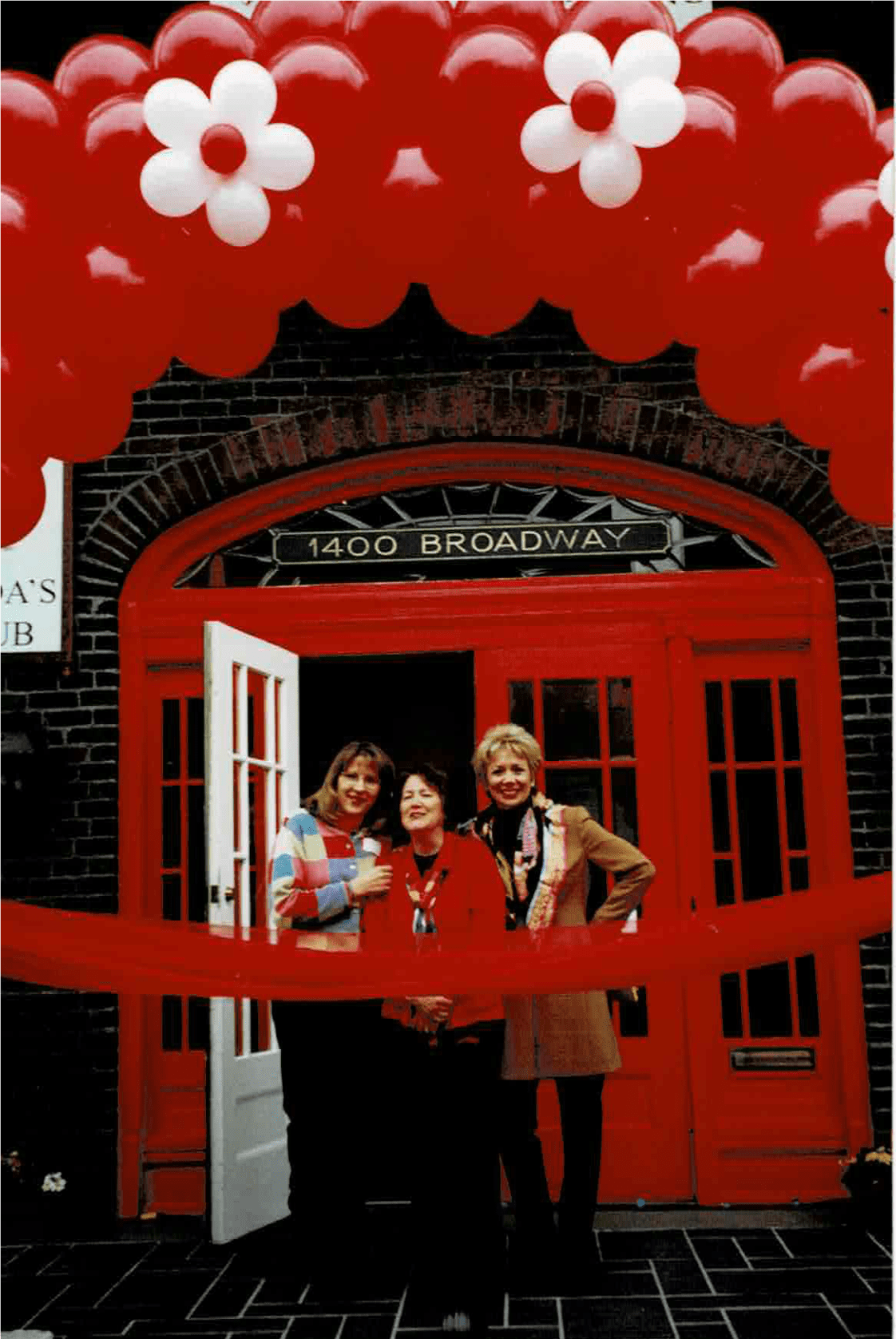
Gilda's Club Seattle Grand Opening

Our mission is to provide pathways of support, education, and community to anyone facing cancer – whether it’s before, during, or after a cancer experience.

Values

Our core values guide us in the work we do every day:

  • Empowerment. We empower people with accurate information and resources so they can navigate a cancer experience with confidence and resilience. 
  • Community. We create space for everyone’s experiences and perspectives to be heard and valued. We recognize the power of authentic connection while navigating the ups and downs that cancer can create. 
  • Accessibility. We strive to remove barriers so that support services and resources are accessible to all individuals, regardless of physical ability, geographic location, language, or socioeconomic status.
  • Belonging. We consciously seek to embrace differences, celebrate diverse experiences and backgrounds, and ensure everyone feels valued and respected. 
  • Laughter. We embrace laughter as a source of strength and resilience in the face of adversity and see it as an essential component to emotional well-being and connection.

At Cancer Pathways, we walk alongside people each year to provide support beyond the medical scope –  in a personalized and comprehensive way. Anyone impacted by cancer – including patients, caregivers, loved ones, family members, and friends – are welcome to join our programs and services. We offer:

Our programs and services are offered in-person throughout Washington state and virtually nationwide. We provide all our programs and services free of charge.

Getting to Cancer Pathways:

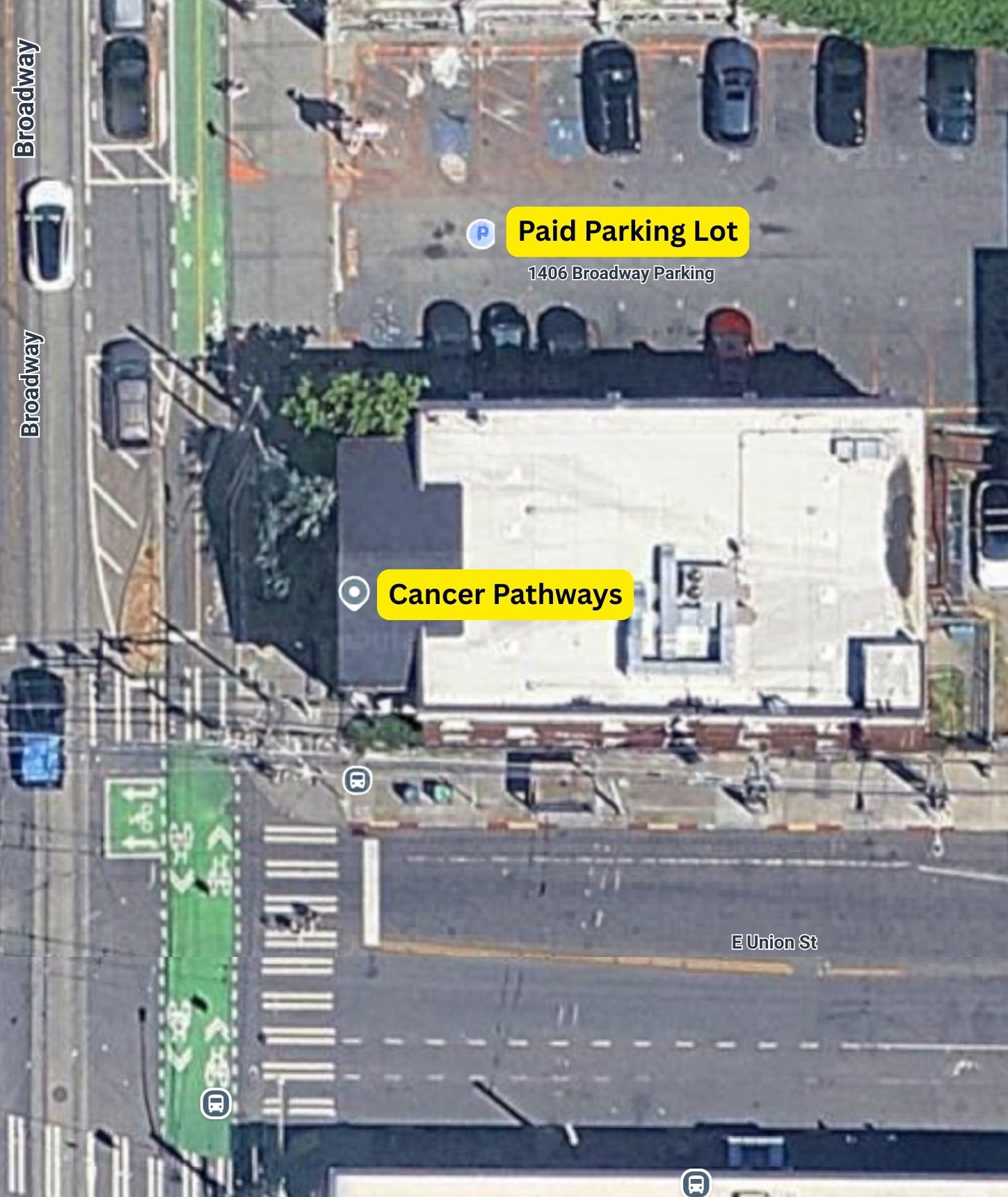
We are located at 1400 Broadway, Seattle WA 98122.

This is the northeast corner of Broadway and Union street.

Public Transit

  • Light Rail, Capitol Hill station
  • Seattle Streetcar
  • Bus routes: 2, 60, G line

Parking

  • Paid Street Parking
  • Paid Parking Lot (see picture)
Gilda's Club Seattle Grand Opening

Our Beginning

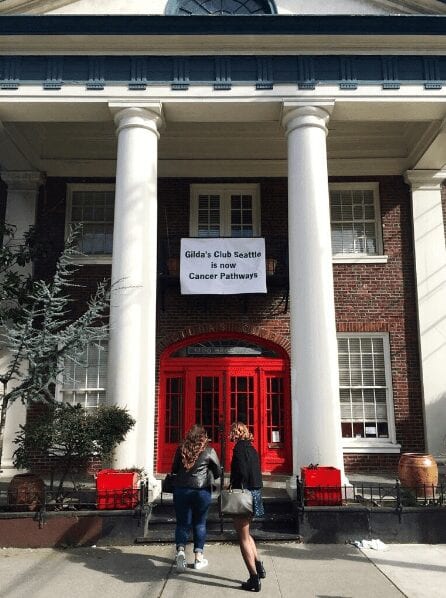
Cancer Pathways was formerly Gilda’s Club Seattle – named in honor of Gilda Radner. When describing the emotional and social support she received after diagnosis, Gilda called for more places of participation, education, hope and friendship to be made available for people living with cancer, as well as their loved ones.

Anna Gottlieb, who became Cancer Pathway’s first Executive Director in 2001, saw an article in People Magazine about the first Gilda’s Club opening in New York City. She was so intrigued by the family focus and the humor that went along with a cancer support community that she went to New York to see it for herself.

Anna was convinced that this wonderful program was needed in Seattle, so she spent more than two decades pursuing that dream and building Cancer Pathways into what it is today. Anna says, “This has been a journey filled with much love, dedication, passion and commitment on the parts of so many. It has been a privilege and honor to play a small part in building this incredible community.”

We officially opened the doors to our Seattle clubhouse in 2001 and have been growing, adapting, and walking alongside people facing cancer ever since.

Interested in reading more about our history and name change?

If you were looking for Cancer Pathways Midwest, Click Here.
Diversity, Equity, & Inclusion Statement

When someone is diagnosed with cancer, it touches not only that person, but also everyone around them, including their children and members of their personal and professional community. For this reason, we at Cancer Pathways strive to amplify the voices of all those who have been impacted by cancer, to remove the stigma associated with cancer, and provide people with a sense of belonging to a caring community.
The members of our community are diverse in age, race, sexual orientation, gender identity, and economic status and geography– some of the many factors that influence one’s likelihood of being diagnosed with cancer, the progression of cancer, and medical care people may receive. We are committed towards better understanding gaps in support services members of our community face, health disparities in communities, disproportionate tolls on underserved communities, and social determinants that lead to different health outcomes for people from all walks of life. This is how we face cancer together.

Spotlights

What to Eat for Cancer Survivors

What to Eat for Cancer Survivors

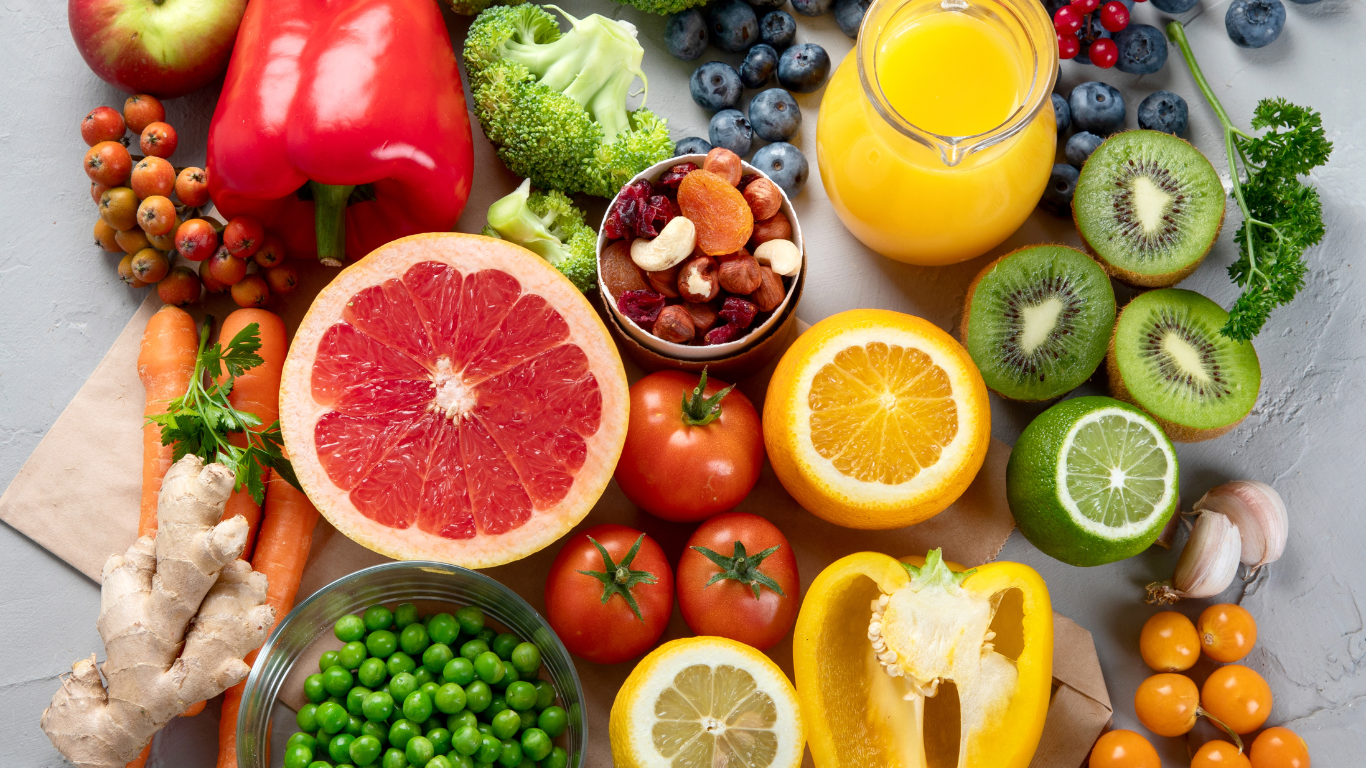
Generally, recommendations for cancer risk reduction are well-suited for cancer survivors. Multiple resources suggest eating mostly unprocessed, plant-based meals for optimal health and to help prevent many chronic health conditions.

What to Eat After a Cancer Diagnosis

What to Eat After a Cancer Diagnosis

After a cancer diagnosis, it’s normal to feel unsure about what to eat. Nutrition can feel confusing at the best of times, and treatment can bring new challenges. This blog focuses on practical steps to support your body through these new challenges.

Foods to Limit for Lower Cancer Risk

Foods to Limit for Lower Cancer Risk

Small changes in what we eat can make a big difference. Discover which foods are linked to higher cancer risk and simple alternatives to try.